
Administrative AI agents
Reading documents, invoices, contracts and emails; managing deadlines, internal reports and repetitive tasks with organised, verifiable outputs.
AI consulting for established businesses
Under control, with privacy at the centre and a team trained to become independent.
I am not selling you yet another software product. I help you build an internal capability: trained people, useful AI agents, custom applications, documented processes and a clear strategy for using artificial intelligence in a practical, manageable and sustainable way.
The real advantage is not having an account on a platform. It is having employees who can use AI in everyday work: administration, sales, marketing, management accounting, production, document analysis, internal software and decision support.
Before buying another tool
Many businesses are experimenting with AI without a clear direction. One department uses ChatGPT, another tries an automation tool, someone creates content and someone uploads sensitive documents without knowing where they end up. The result is often confusion rather than transformation.
The programme I offer brings structure: start with real processes, assess where AI creates value, define the right architecture and train people internally so that they can continue the work after my involvement ends.
What could become possible
After a thorough programme, the business can move beyond using AI to write text and start building its own tools: agents, applications, software, dashboards, document systems and operational solutions working with internal processes.
Reading documents, invoices, contracts and emails; managing deadlines, internal reports and repetitive tasks with organised, verifiable outputs.
Internal applications for specific workflows, project management, archives, procedures, databases and tools that standard software does not cover well.
Create pages, content, SEO structures, prototypes and digital materials independently, reducing reliance on long development lead times.
Prospect analysis, sales content, lead classification, email support, sales scripts, reports and follow-up automation.
Readable reports, predictive analysis, summaries of business data and support for quicker, more focused operational decisions.
Sensors, edge gateways, local models and AI agents to monitor machines, inefficiencies, anomalies and signs of wear before they become problems.
Training that produces tools
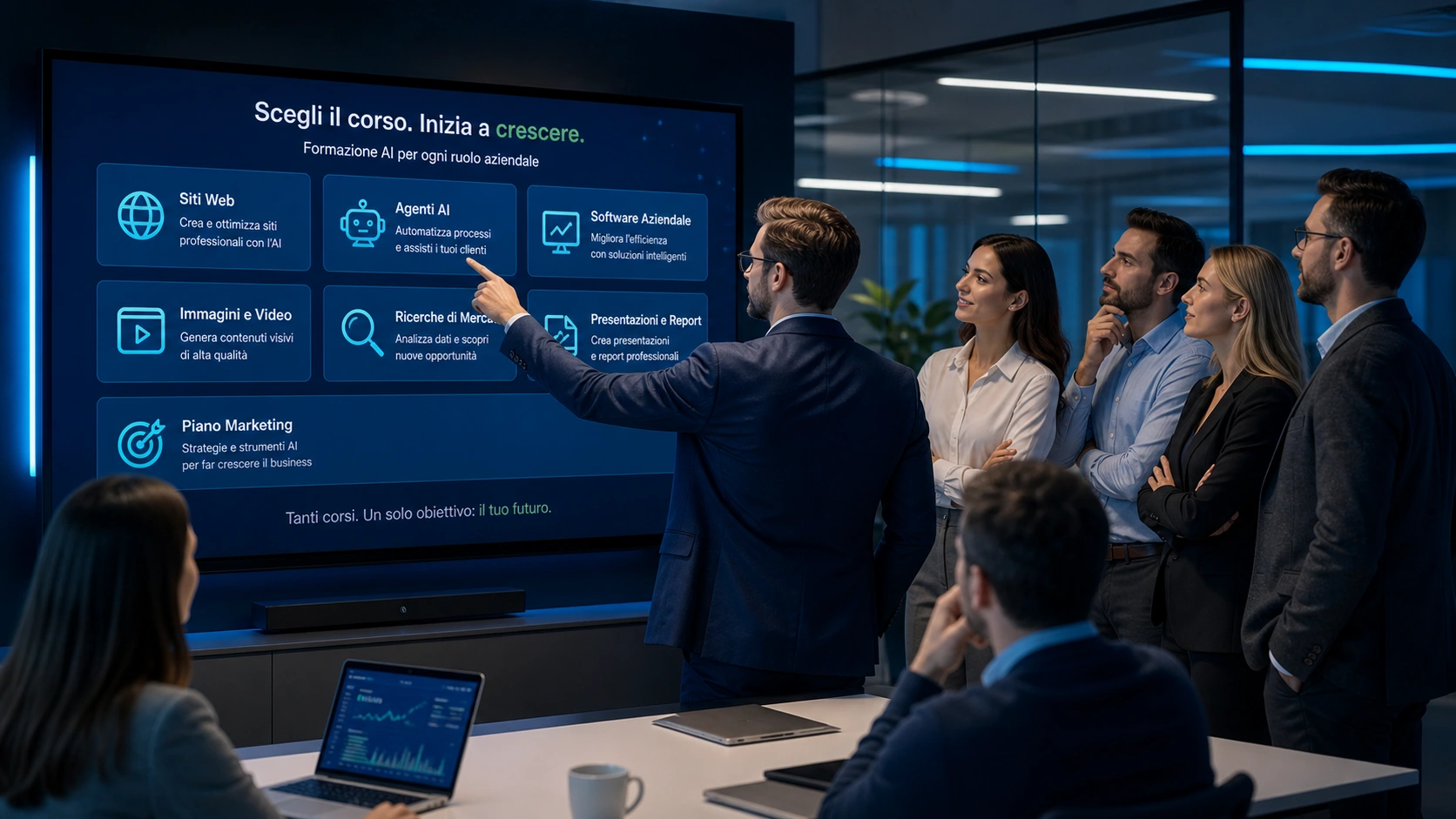
Training should not end with slides forgotten in a folder. It should produce real expertise: understanding how an agent works, how to write an operational prompt, how to connect a model to documents, databases or APIs, how to validate an output and how to avoid exposing sensitive data.
Local AI, privacy and control
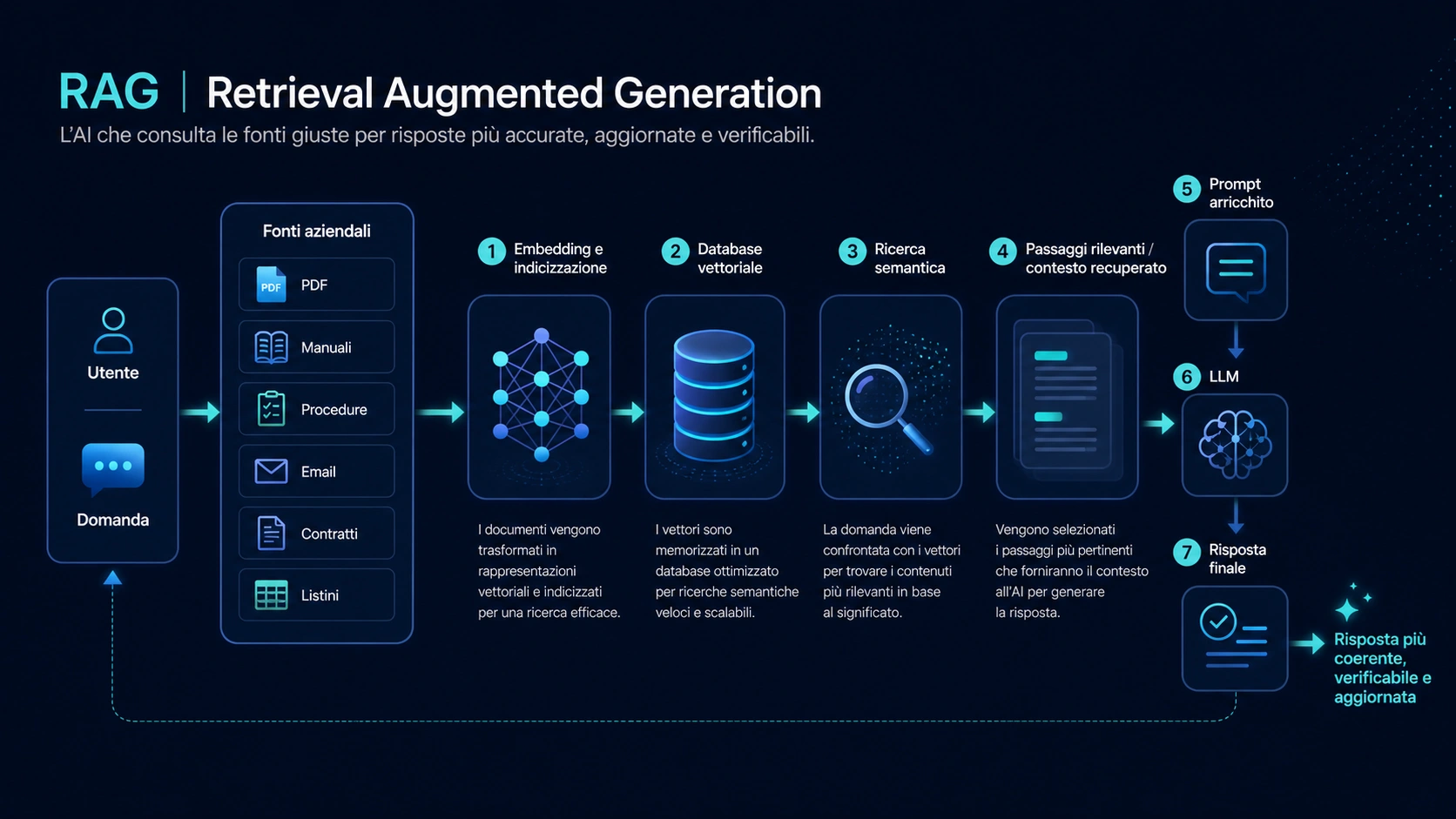
There are cases where the cloud is practical. But there are also processes where business data, internal documents, price lists, production data, emails and archives should not be uploaded to different platforms without an assessment.
That is why I always consider local, hybrid and on-premise architectures too: models installed on business machines, internal knowledge bases, accessible logs, access rules, human oversight and traceable decisions.
Standard software often forces you to adapt the business to the product. A well-designed AI programme works the other way round: it starts with your processes and builds tools around how your business actually works.
The method
The programme can run from a few months to a year, depending on complexity. The aim is to create value immediately while keeping a long-term perspective.
Analysis of processes, data, bottlenecks, repetitive activities and risks relating to privacy, roles and access.
Setting priorities: what to automate, what should remain human, and what to develop in the cloud, locally, in a hybrid setup or on premise.
Building useful prototypes while the team learns the method, tools, prompts, agentic logic and output checks.
Progressively transferring skills so that the team can continue, improve and create new agents and applications.
Production and IIoT
In manufacturing businesses, value grows when artificial intelligence meets sensors, production-line data, maintenance, consumption, anomalies and machine history. The aim is to create intelligent layers for interpretation, diagnosis and operational support, rather than replacing PLCs or real-time systems.
The practical difference
FAQ
No, but you need to be willing to involve people internally. The programme can start with a contact in operations, administration, marketing or management.
Not always. It depends on objectives, models, hardware and the performance required. However, many business use cases can be designed to work locally or in hybrid mode, reducing dependency on cloud services and tokens.
An initial assessment can be quick. A structured programme covering training, roadmaps and skills transfer may take 6 to 12 months.
No. Theory is included only where needed. The core is practical: real processes, agents, prototypes, applications, use cases and internal procedures.
First step
Leave your name and email. The initial discussion helps establish whether it makes sense to work on training, AI agents, internal applications, local or on-premise AI, automation or IIoT.